
Our Process
Lime. Salt. Time.
The process is simple. Executing it consistently is not. Traditional preservation, disciplined production, modern presentation.
- 01
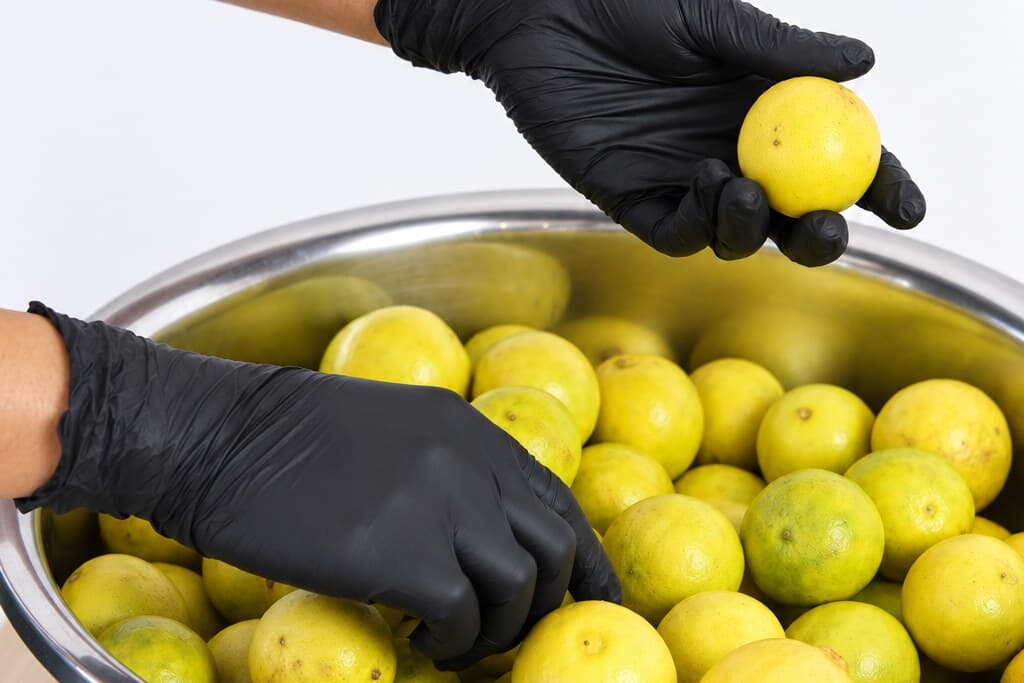
Selecting the fruit
Whole Cambodian limes, chosen for size, ripeness, and skin condition, and bought from growers the house knows by name. The ingredient is only as good as the fruit it starts from.
- 02
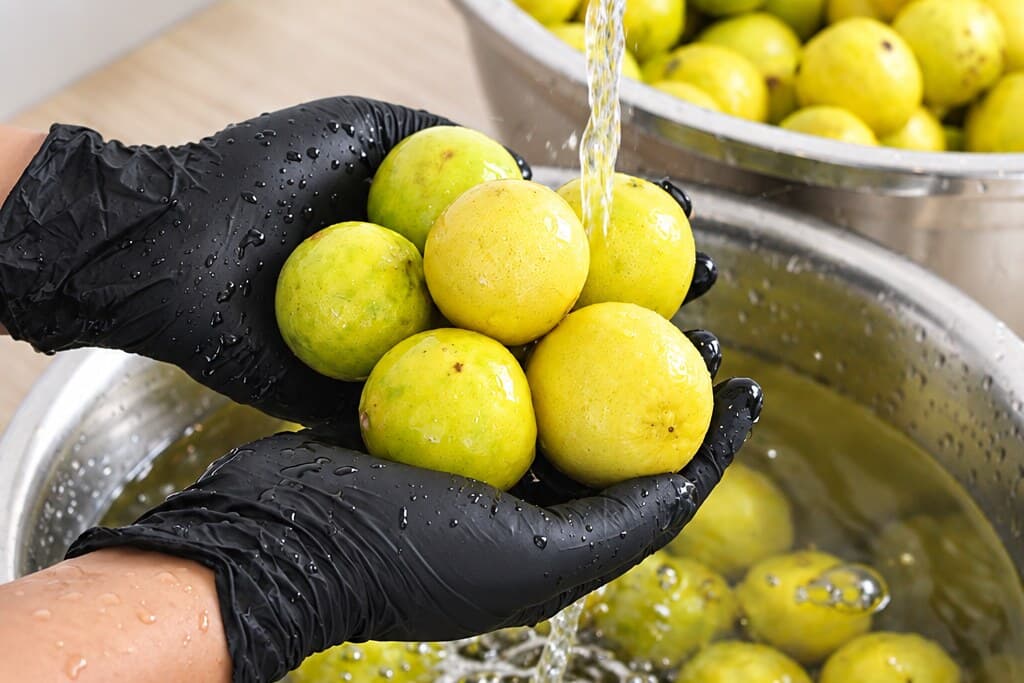
Cleaning and preparation
Fruit is washed and prepared under controlled, food-safe handling before anything else happens.
- 03
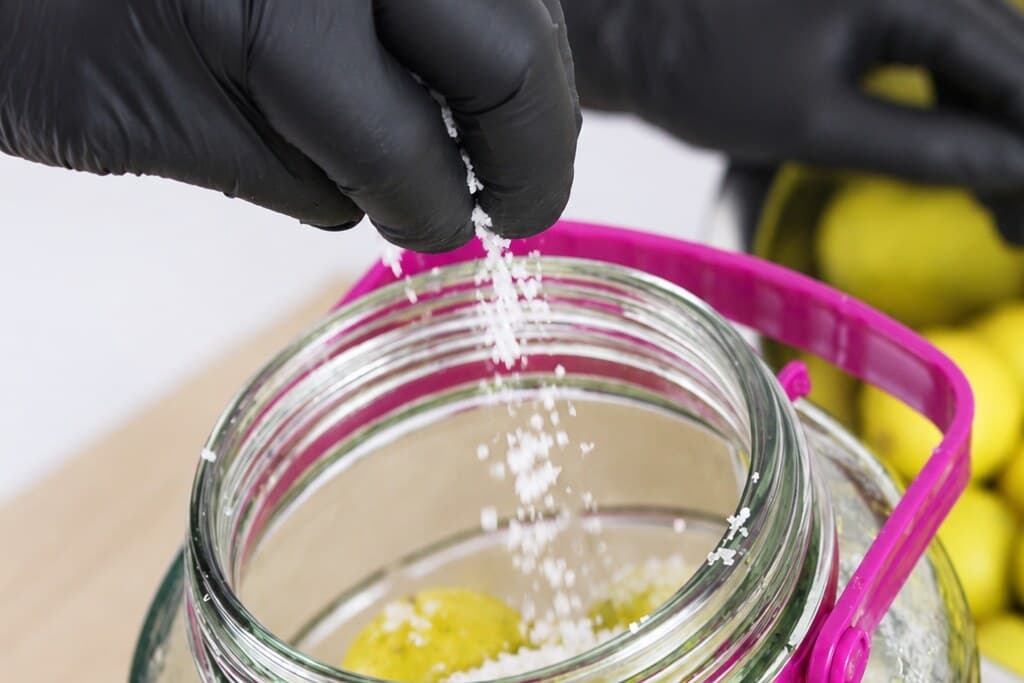
Salt curing
Whole limes are packed in Cambodian sea salt — the fruit and the salt, and nothing added to hurry them. This is the step that begins the transformation from fresh fruit to preserved ingredient.
- 04
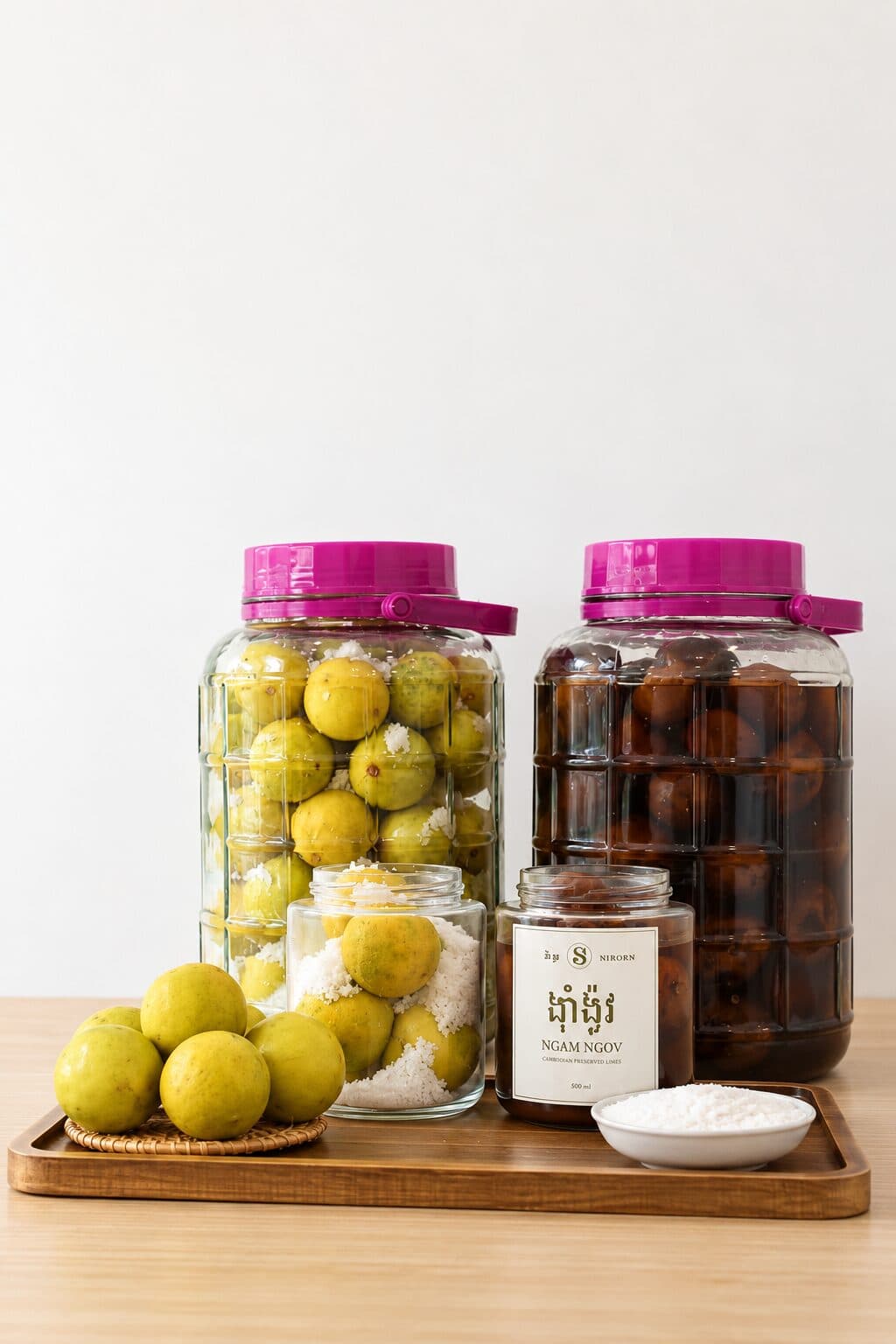
Time and transformation
Months in the salt, not days: acidity mellows, salinity settles, and aroma deepens. Nothing is rushed.
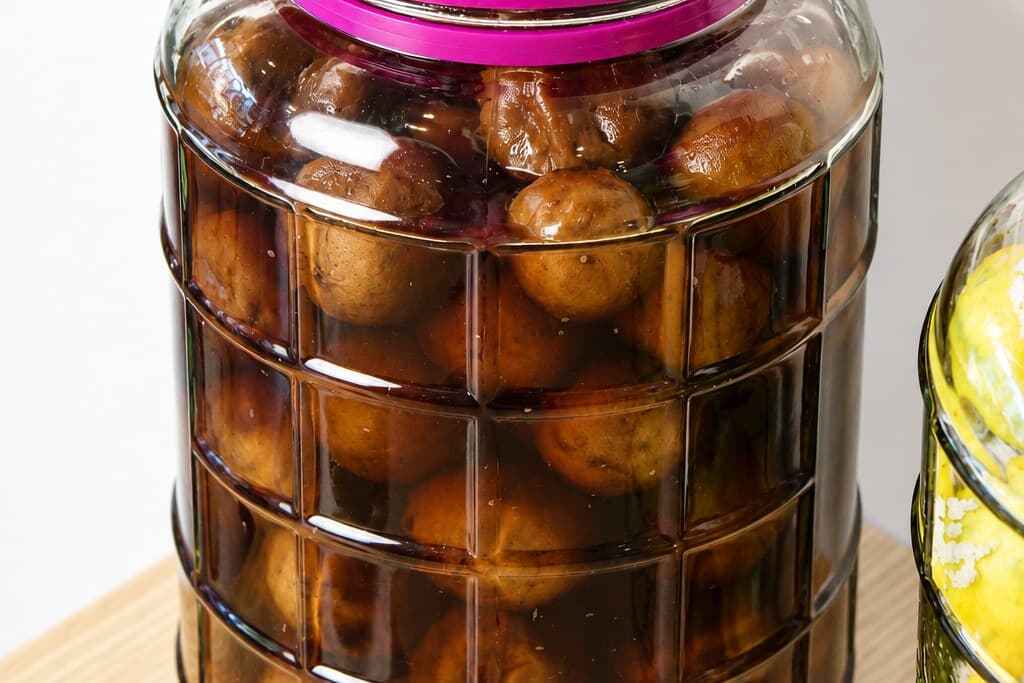
- 05
Inspection
Every batch is inspected before it is allowed to move forward. A batch is released by a person, not a schedule.
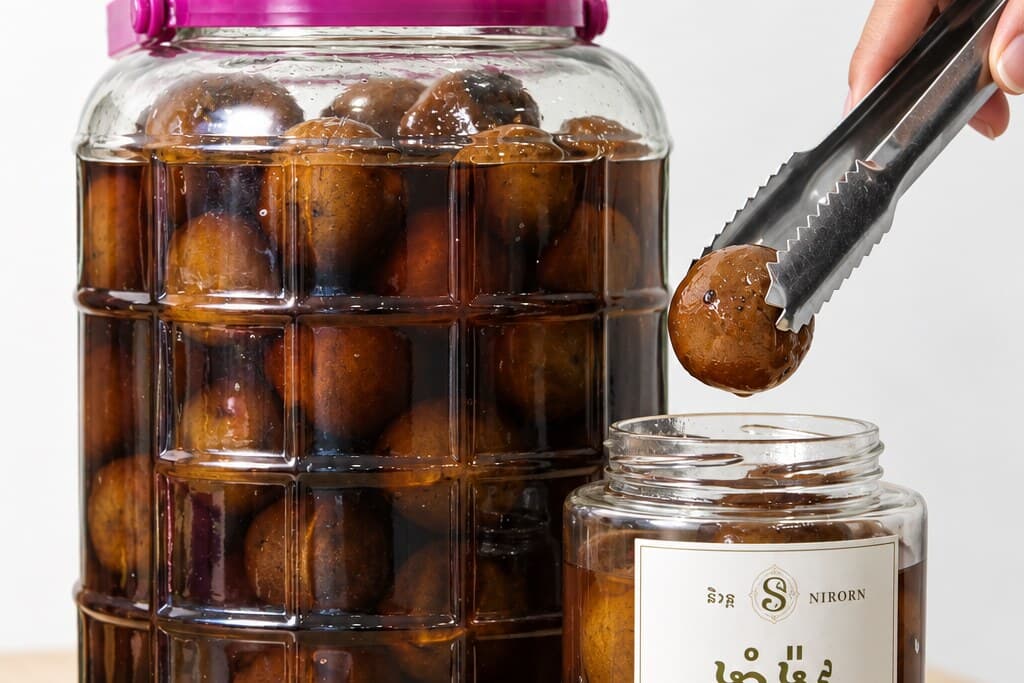
- 06
Packing
Clean packaging and clear labeling, batch by batch, ready to leave the house.
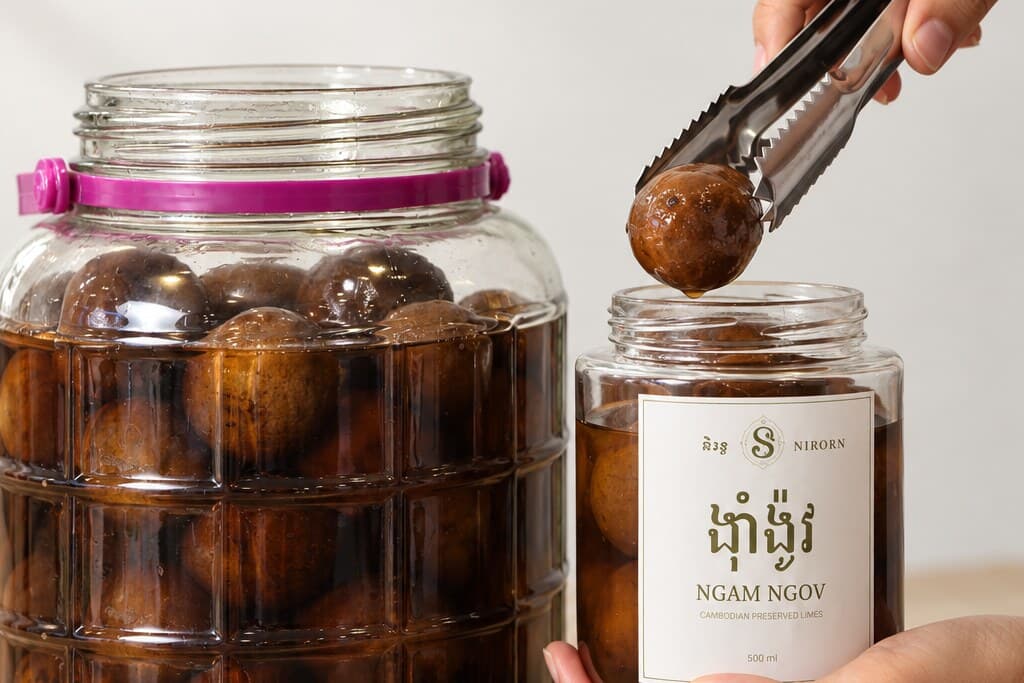
What the months look like
The same fruit, five times.
Colour is the cure's own clock. Nothing is added to hurry it along and nothing is added to deepen it — the fruit, the salt, and the time it takes.
Day 0
Fresh limes and salt
Day 7
Salt draws out the liquid
Day 15
Flavour begins to develop
1–3 months
Acidity mellows
3+ months
Deeper aroma and colour
Traceability and batch records
Every jar knows its batch.
Production is recorded batch by batch: when the fruit was salted, when it was released, and by whom. That record is what lets a jar carry its own history — the day it was made, not a printed approximation.
The process is preservation by salt curing. We do not describe it as fermentation unless and until that has been verified for our specific method.
CMP-0908
- Salted
- 8 September 2026
- day 38
- Slow maturation
- Expected release
- 7 December 2026
FAQ
Questions
What is Ngam Ngov?
Ngam Ngov is a salt-cured lime: whole limes are salted and matured for months, producing an ingredient with concentrated citrus, salinity, gentle bitterness, and savory depth. It has a strong connection to Cambodian food culture and works well beyond it.
What does salt-cured lime taste like?
Bright citrus and salinity up front, a gentle bitterness from the peel, and a savory, almost umami depth. It behaves like acid and salt at once, without any added sugar.
How do you use Ngam Ngov?
Use the whole fruit, blend the flesh into sauces and dressings, stir the brine into marinades, or build drinks around its mature citrus. It suits glazes, grilled pork, duck and poultry, seafood, broths, cocktails, and desserts.
Is Ngam Ngov the same as preserved lemon?
No. Preserved lemon leans floral and soft; salt-cured lime leans savory and sharp, with a more mature, umami character — a different, more savory register of preserved citrus.
Where is Ngam Ngov made?
In Cambodia, by NIRORN — a preserving house that pairs traditional salt curing with modern, controlled production and clear labeling.
How should Ngam Ngov be stored?
Keep the jar sealed and refer to the label. Detailed storage and best-before guidance is being finalized for the retail release.